Filters
Clear allPrice
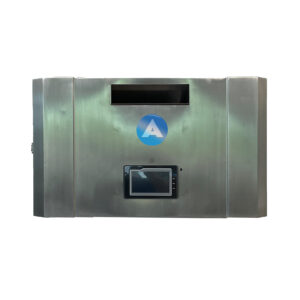
Humidity Control
Aeromist humidity control systems are designed for commercial and industrial environments that require consistent, automatic moisture management. Whether you’re managing a greenhouse, warehouse, laboratory, data center, food production area, or office space, maintaining stable relative humidity (RH) can help protect equipment, improve air quality, and support operational consistency.
Use this guide to understand where mist-based industrial humidification systems fit and to choose between the Xtreme XS and Xtreme XL humidity control systems for your space.
What ‘humidity control’ means (and why it matters in commercial/industrial spaces)
Humidity control refers to actively managing relative humidity (RH), the percentage of moisture in the air compared to the maximum it can hold at a given temperature.
In commercial and industrial settings, maintaining proper RH can help:
- Reduce static electricity in equipment-heavy spaces
- Support product consistency in manufacturing
- Protect sensitive electronics
- Improve plant growth conditions in greenhouses
- Reduce dry-air discomfort in occupied spaces
An industrial humidification system adds controlled moisture to the air when RH drops below a set target. Aeromist systems use mist-based humidification, which disperses fine water droplets into the air and is managed by a built-in digital humidistat (a humidity sensor and controller).
Rather than manual adjustment, these systems operate automatically, activating when RH falls below the set point and shutting off when the desired level is reached.
Common applications for humidity control
Aeromist humidity control systems are used across multiple industries where consistent moisture levels are important for performance, product quality, or comfort.
Greenhouses & agriculture (support plant growth and yield)
A greenhouse humidification system helps maintain optimal RH for plant growth. Stable humidity can support healthier plants, improved yield consistency, and reduced plant stress. In agriculture and specialty cultivation environments, automatic humidity control reduces manual monitoring and adjustment.
Manufacturing, data centers & laboratories (protect equipment, reduce static, improve consistency)
Low humidity can increase static electricity and create environmental variability. In manufacturing facilities, data centers, and laboratories, controlled RH can help reduce static-related risks and maintain more stable operating conditions for sensitive equipment.
For laboratory humidity control, consistent RH can also support repeatable testing environments.
Food & pharmaceutical environments (quality and spoilage prevention)
In food production and pharmaceutical humidity control settings, managing RH can help reduce dry-air conditions that may affect product quality. Controlled environments are especially important where product stability and consistency are critical.
Always confirm environmental requirements with your regulatory guidelines before installation.
Offices and commercial spaces (comfort, reduced dry-air issues)
In commercial offices and shared spaces, low humidity can contribute to dry-air discomfort. A properly sized commercial humidifier can help maintain a more comfortable indoor environment without complex HVAC integration.
How to choose the right Aeromist humidity control system
Selecting between Xtreme XS and Xtreme XL comes down to four main factors:
- Coverage area
- Mist output rate (GPH)
- Controls and automation features
- Water management and safety
Step 1: Size by coverage area (XS up to 1500 sq ft vs XL up to 4000 sq ft)
Start with square footage.
- Xtreme XS: humidity control up to 1500 sq ft
- Xtreme XL: humidity control up to 4000 sq ft
These coverage ratings provide a general sizing framework. Ceiling height, airflow, ventilation rate, and moisture load can affect performance. For complex environments, consult facility specifications and review each product’s Technical Specifications.
If your space exceeds 4000 sq ft, multiple units may be required.
Step 2: Size by output rate (mist output per hour and ventilation considerations)
Next, review mist output (GPH – gallons per hour).
- Xtreme XS: 0.64 GPH
- Xtreme XL: 1.8 GPH
Higher ventilation or larger open spaces typically require higher output to maintain target RH.
If your facility has:
- High air exchange rates
- Open bay warehouse layouts
- Large greenhouse volumes
The higher-output XL model may be more appropriate. Always match mist output to space size and air movement conditions.
Step 3: Confirm controls & automation (digital humidistat, sensor cable options)
Both systems include:
- Built-in digital humidistat
- Touchscreen color display
- 7-day temperature and RH data recorder
The Xtreme XS includes customizable sensor cable lengths for flexible placement.
A humidistat automatically activates mist output when RH drops below the set point and shuts off once the target is reached. This makes both units fully automatic humidification systems.
Data logging allows operators to monitor trends and fine-tune settings.
Step 4: Water management & safety (solenoid feed, regulator, waterproof GFCI)
Both XS and XL include:
- Fully automatic electronic solenoid water feed
- Integrated pressure regulator
- Waterproof dual ball bearing fan
- Stainless steel enclosure
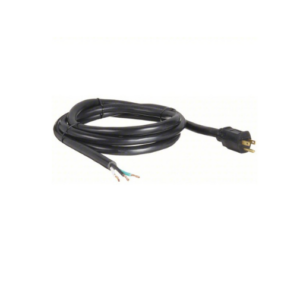
- Waterproof GFCI (Class 1A) plug and cord
A solenoid feed automatically controls water flow, while the regulator ensures proper pressure management. The integrated GFCI provides electrical safety in moisture-prone environments.
Compare Aeromist Xtreme XS vs Xtreme XL (quick table)
| Feature | Xtreme XS | Xtreme XL |
| Coverage Area | Up to 1500 sq ft | Up to 4000 sq ft |
| Mist Output | 0.64 GPH | 1.8 GPH |
| Humidistat | Built-in digital | Built-in digital |
| Data Logging | 7-day temp/RH recorder | 7-day temp/RH recorder |
| Water Feed | Automatic solenoid + regulator | Automatic solenoid + regulator |
| Enclosure | Stainless steel case | Stainless steel case |
| Safety | Waterproof GFCI 1A plug | Waterproof GFCI Class 1A plug |
| Ozone Generator | Programmable | Programmable |
For full specifications, see:
- Xtreme XS Humidity Control System
- Xtreme XL Humidity Control System
Xtreme XS highlights (compact, .64 GPH, up to 1500 sq ft)
The Xtreme XS is ideal for smaller commercial rooms, greenhouses, labs, and controlled production areas up to 1500 sq ft.
Key features:
- 0.64 GPH mist output
- Built-in digital humidistat
- Customizable sensor cable lengths
- Stainless steel enclosure
- Touchscreen display
- 7-day data recorder
- Programmable ozone generator
- Waterproof GFCI plug
Xtreme XL highlights (higher output, 1.8 GPH, up to 4000 sq ft)
The Xtreme XL is designed for larger spaces requiring higher output and extended coverage.
Key features:
- 1.8 GPH mist output
- Up to 4000 sq ft coverage
- Built-in digital humidistat
- Stainless steel case
- Touchscreen display
- 7-day temp/RH recorder
- Programmable ozone generator
- Waterproof GFCI Class 1A plug
Air quality add-ons (ozone generator feature): what it is and when it helps
Both XS and XL include a programmable ozone generator feature.
An ozone generator can help manage air and water quality within the misting environment. It is adjustable and programmable through the system interface.
Whether ozone is necessary depends on your application and facility requirements. In environments such as greenhouses or production areas, operators may use ozone as part of broader sanitation or air management strategies.
Always review operational guidelines and regulatory considerations before enabling ozone features.
Installation and operation basics (keep it practical)
These systems are designed for commercial and industrial installation environments. Follow product manuals and local electrical codes.
Placement, airflow, and avoiding over-humidification
Install units:
- Where airflow can distribute mist evenly
- Away from direct obstruction
- At appropriate height for effective dispersion
Avoid over-humidification by:
- Setting accurate RH targets
- Monitoring the 7-day data recorder
- Adjusting output if condensation is observed
Using the 7-day data recorder to tune settings
Both systems include a built-in 7-day temperature and humidity recorder.
Use this feature to:
- Monitor RH trends
- Identify peak load periods
- Adjust setpoints for improved stability
Historical tracking helps operators optimize performance without guesswork.
Maintenance and reliability expectations
Aeromist humidity control systems are designed for reliability, but routine inspection is recommended.
What “maintenance-free” means in practice (inspection checklist)
While these systems minimize routine service, operators should:
- Inspect water connections
- Verify humidistat calibration periodically
- Check fan operation
- Review data logs for irregularities
Always consult the product’s Technical Specifications for service intervals.
Water quality considerations (filtration/scale)
Water quality affects long-term performance.
If your facility has:
- High mineral content
- Sediment-heavy supply
Consider installing appropriate filtration. See the Filters category for sediment and scale solutions if required for your application.
FAQ
Quick answers to common sizing and operation questions.
How do I choose XS vs XL for my space?
Start with square footage. The Xtreme XS is rated for areas up to 1500 sq ft, while the Xtreme XL is designed for spaces up to 4000 sq ft.
However, square footage is only part of the equation. You should also consider:
- Ceiling height
- Air exchange or ventilation rate
- Open doorways or bay openings
- Overall moisture load in the space
For example, a tightly controlled lab at 1,200 sq ft may perform well with an XS unit, while a 1,200 sq ft greenhouse with active ventilation may require higher output. If your space approaches the upper limit of coverage, or has high airflow, the XL may provide better performance stability. For areas larger than 4,000 sq ft, multiple units may be required.
What mist output (GPH) do I need?
Mist output is measured in GPH (gallons per hour) and determines how much moisture the system can introduce into the air.
- Xtreme XS: 0.64 GPH
- Xtreme XL: 1.8 GPH
Higher ventilation rates and larger open spaces typically require more output to maintain consistent RH levels. Warehouses, greenhouses, and facilities with frequent air exchange often benefit from the higher-capacity XL model.
If your space is smaller and climate-controlled, the XS may provide sufficient output without oversizing. When in doubt, consider both square footage and air movement when selecting your system.
Do these systems include automatic humidity control?
Yes. Both the Xtreme XS and Xtreme XL include a built-in digital humidistat that continuously monitors relative humidity (RH).
Once you set your desired RH level, the system automatically:
- Activates when humidity drops below the setpoint
- Shuts off when the target RH is reached
This creates a fully automatic humidification system, no manual adjustment required. Both units also feature a touchscreen display and a 7-day temperature and humidity data recorder, allowing operators to monitor trends and fine-tune settings over time.
Is the ozone generator required, and is it adjustable?
Both systems include a programmable ozone generator feature. It is adjustable through the system interface and can be turned on or configured based on operational preferences.
Whether ozone is necessary depends on your specific environment and internal guidelines. Some facilities incorporate ozone as part of broader air or water management strategies, while others may choose not to use it. Always review regulatory requirements and internal policies before enabling ozone features in controlled environments.
What power/safety features are included (GFCI)?
Both the XS and XL models include a waterproof GFCI (Class 1A) plug and cord, designed for operation in moisture-prone environments.
Additional built-in safety and durability features include:
- Fully automatic electronic solenoid water feed
- Integrated pressure regulator
- Waterproof dual ball bearing fan
- Stainless steel enclosure
These features are designed to support safe, reliable operation in industrial and commercial settings. Always follow local electrical codes and installation guidelines.
Where are these systems commonly used?
Aeromist humidity control systems are commonly installed in:
- Greenhouses and agricultural facilities
- Warehouses and manufacturing plants
- Data centers and equipment-heavy facilities
- Laboratories and research environments
- Food production and pharmaceutical spaces
- Commercial offices and shared workspaces
Any environment where maintaining stable RH is important for equipment protection, product quality, plant health, or occupant comfort may benefit from a mist-based industrial humidification system.
In the spotlight



Aeromist benefits
At Aeromist, we’re committed to delivering the highest quality cooling solutions that make a real difference.