Your cart is currently empty
Price
Kits
Oscillating Misting Fan XL Kit
Original price was: $3,999.00.$3,599.10Current price is: $3,599.10.
Aeromist misting systems deliver targeted outdoor cooling by producing an ultra-fine mist that evaporates almost instantly, reducing air temperature and creating a more comfortable environment on patios, decks, and commercial outdoor spaces. This page explains what’s included in an Aeromist misting kit, how flash evaporation provides fast, effective cooling, and which components are most important for dependable, long-term performance. You’ll also learn the key differences between high- and low-pressure systems, when a misting fan or portable unit may be the right choice, and how to plan installation and maintenance to ensure lasting results and reliable cooling.
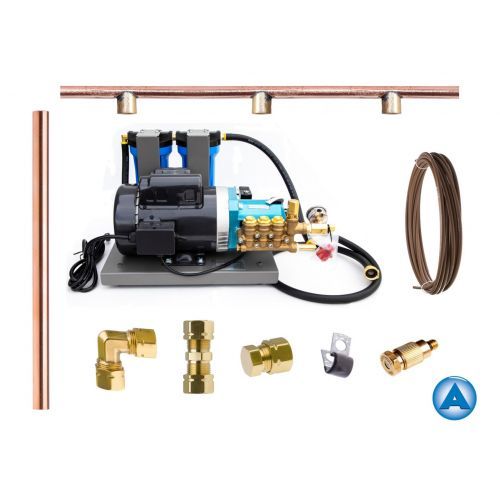
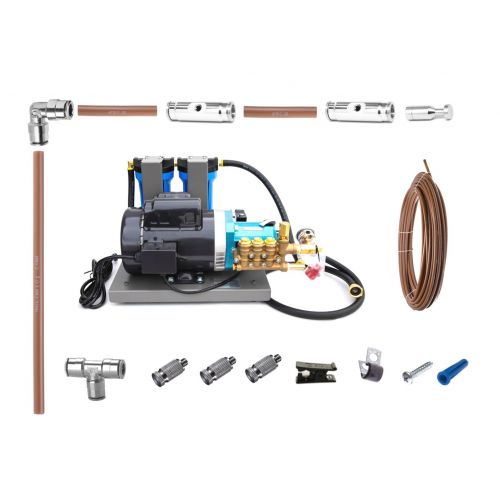
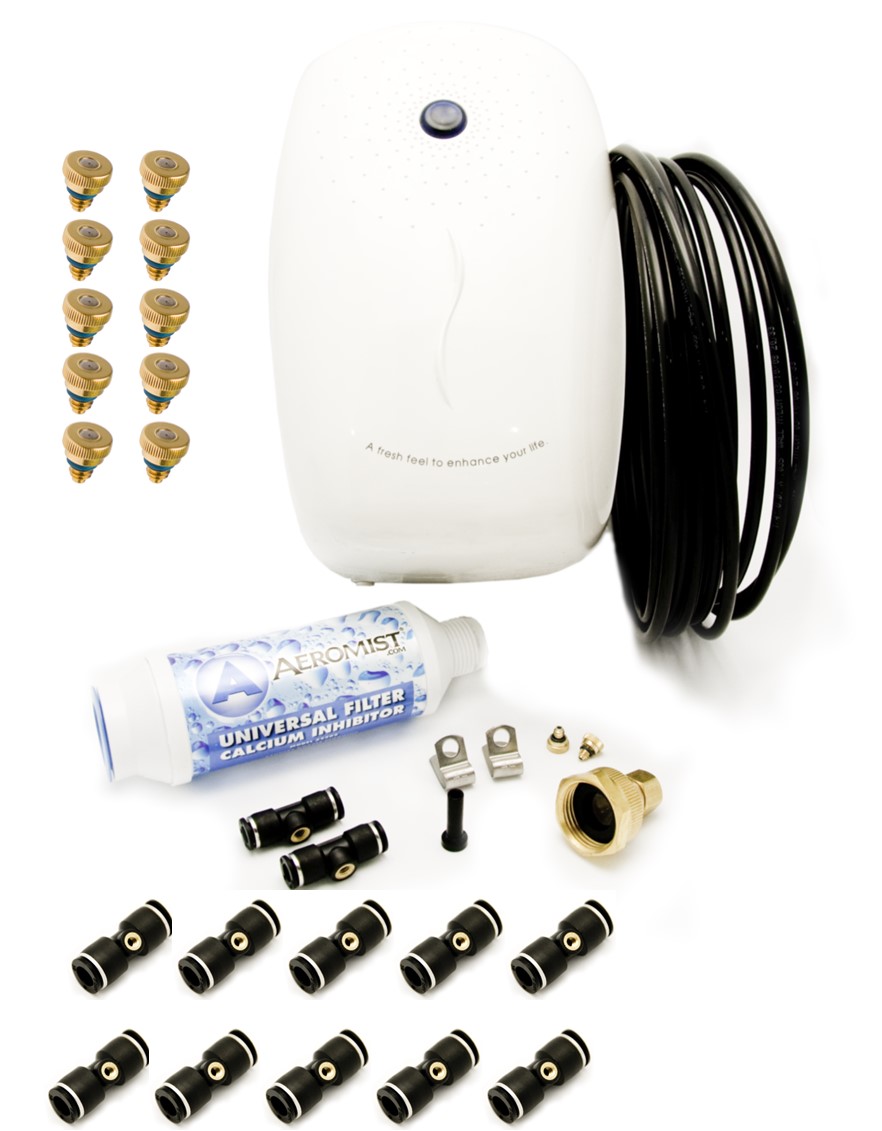
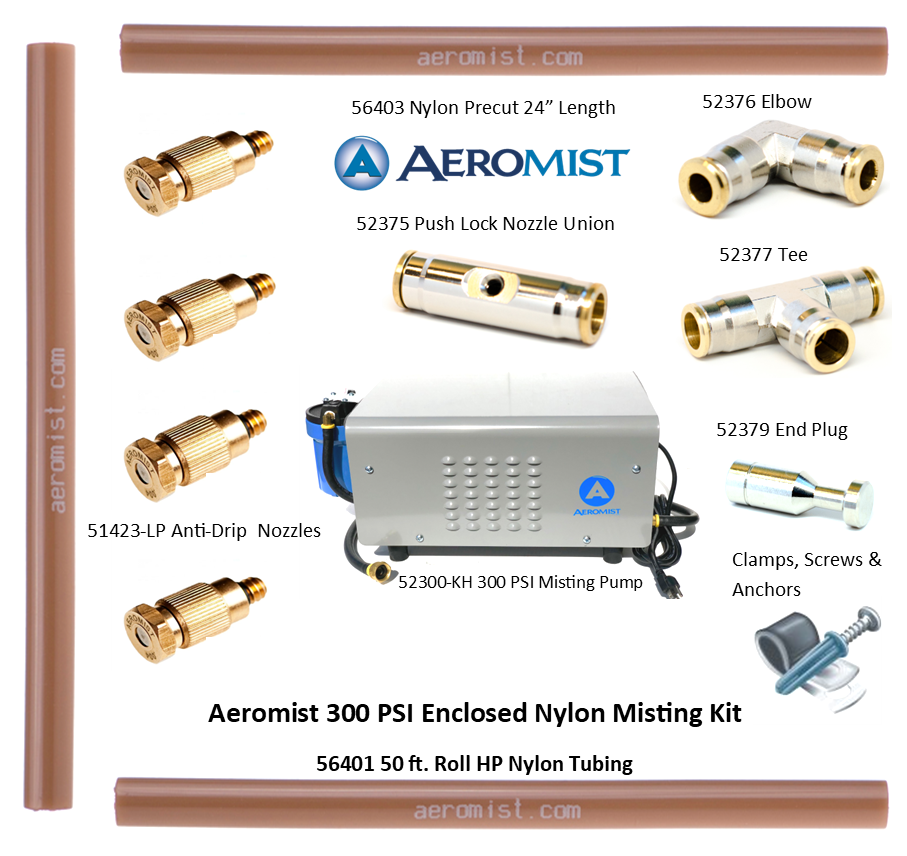
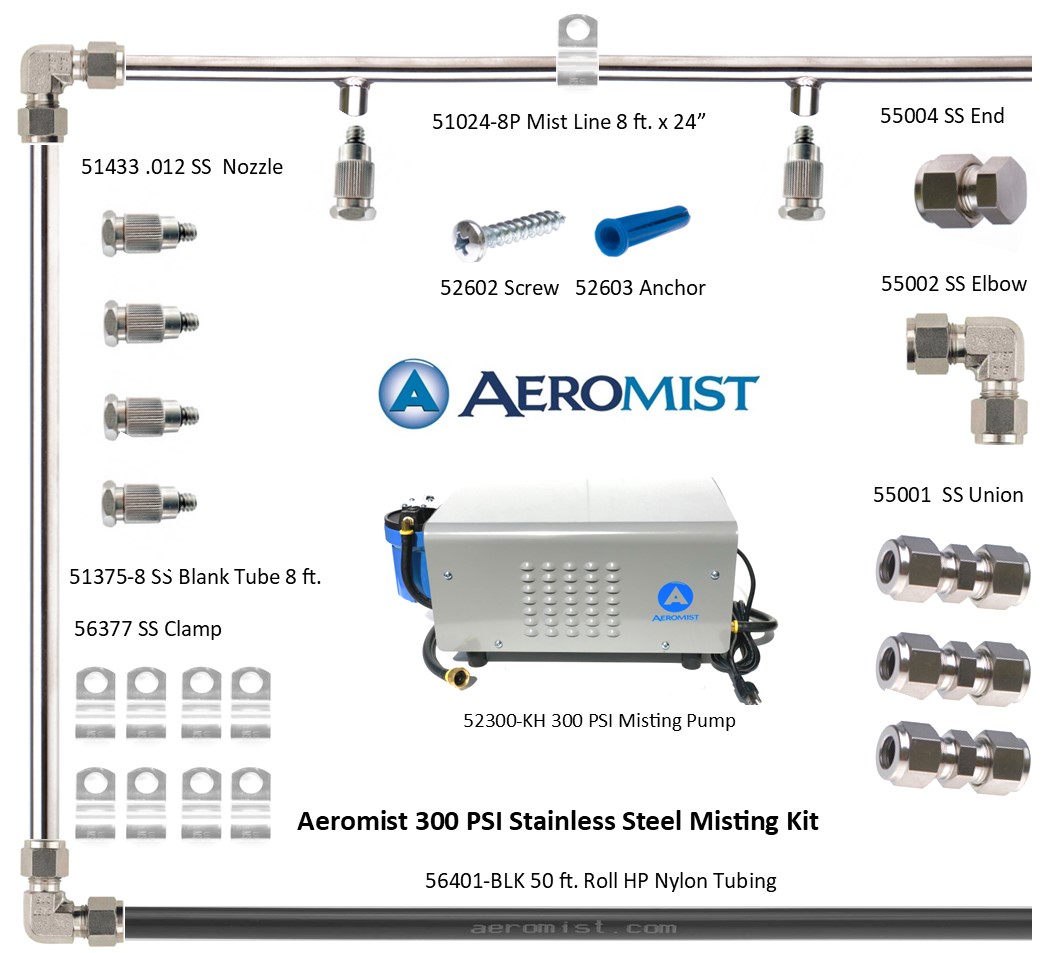
A misting system provides everything needed to cool outdoor spaces efficiently, including a high-pressure pump, mist line, nozzles, filters, and precision fittings that work together to create an ultra-fine mist. Cooling occurs through natural evaporative cooling, where water is atomized into microscopic droplets that absorb heat from the surrounding air as they evaporate. This process lowers the ambient temperature without soaking people or surfaces, delivering near-instant relief from the heat. The result is a more comfortable environment for people and pets, along with reduced airborne dust in the cooled area. Much like sweat evaporating from your skin and pulling heat away from your body, a misting system uses evaporation to cool the air around you.
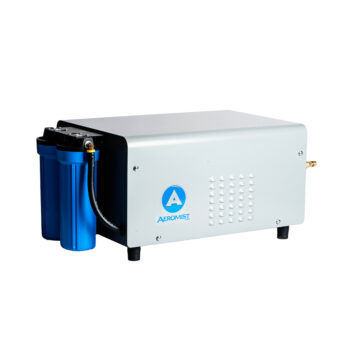
A typical Aeromist system is a fully integrated evaporative cooling solution designed for reliable performance and long service life. At the heart of the system is a high-pressure pump that delivers water at the precise PSI required for efficient misting. Water passes through advanced filtration and scale-prevention components to protect internal parts and prevent nozzle clogging. Precision fittings and nozzles create ultra-fine droplets that evaporate quickly for effective cooling, while monitoring and control components ensure safe, consistent operation. Together, these elements form a complete misting system that is easy to install, maintain, and operate.
System Components and Functions
Evaporative cooling in misting systems works by using water’s natural ability to absorb heat as it evaporates. The system pushes water through very small nozzles at high pressure, creating a fine mist made up of tiny droplets. These droplets evaporate quickly in the air, and as they change from liquid to vapor, they absorb heat from the surrounding environment. This process lowers the air temperature, creating a refreshing cooling effect without soaking people or surfaces.
This type of cooling works best in dry or low-humidity conditions, where the air can easily absorb moisture. In these environments, mist systems can reduce temperatures by a noticeable amount, making outdoor spaces more
comfortable during hot weather. Properly designed systems produce droplets small enough to evaporate before reaching the ground, so customers feel cooler air rather than getting wet. The result is an efficient, natural, and energy-friendly way to cool patios, outdoor seating areas, and open-air spaces.
Aeromist misting systems provide precise outdoor cooling by producing an ultra-fine mist that evaporates almost instantly, lowering air temperature and creating a more comfortable environment on patios, decks, and commercial outdoor spaces. On this page, you’ll learn what’s included in an Aeromist misting system, and how evaporative cooling delivers fast, effective cooling, and which components are essential for long-term, reliable performance. We also cover the key differences between low- and high-pressure systems, when a misting fan or portable a portable fan is the right choice, and how to plan installation and maintenance for lasting results.
When choosing a system, consider your cooling needs, installation preferences, and whether you want an introductory, budget-friendly setup or a high-performance solution.
High-pressure systems produce ultra-fine, micron-scale droplets that evaporate rapidly, providing more efficient cooling with minimal surface wetting. These systems rely on larger pumps, fittings, and installation, and often benefit from professional setup.
Low-pressure kits are easier to install, budget-friendly, and ideal for DIY projects, but their larger droplets may not fully evaporate in all conditions, can use more water for similar cooling, and may leave you or nearby surfaces noticeably wet.
Understanding these trade-offs helps you decide whether maximum performance or simplicity is your priority. The next section explains how adding fans or choosing portable units can shift that balance for your
space and needs.
Misting fans combine airflow with ultra-fine mist to push cooled air into occupied areas, enhancing comfort while keeping surfaces mostly dry. Portable misting systems offer flexible placement for events, patios, or temporary seating and allow for faster setup compared to permanent mist lines. Their advantages include mobility and targeted cooling, but they require both a water source and a power source, and some people may not prefer their appearance. When deciding between permanent and portable systems, consider factors such as event duration, available power and water, and whether a fixed installation better meets your long-term cooling needs.
Commercial operators use Aeromist misting systems to enhance guest comfort, extend usable outdoor space, and address operational challenges such as heat, dust, and odors. Restaurants, hospitality venues, and event spaces rely on high-pressure misting systems or fan-integrated solutions to deliver consistent cooling across larger areas, encouraging guests to stay longer and improving overall experience. In industrial and agricultural environments, misting is used for evaporative cooling, dust suppression, and process control—helping improve air quality, protect equipment, and increase worker comfort. High-pressure misting systems create ultra-fine droplets for powerful evaporative cooling and are suitable for virtually any application, from small patios to large commercial and industrial operations including restaurants, dairy farms, stables, warehouses, greenhouses, mushroom or marijuana grow facilities, and other indoor or outdoor spaces where cooling is required.
These examples highlight how different commercial environments benefit from tailored misting solutions based on space size, cooling goals, and operational requirements.
Proper installation and routine maintenance are essential to keeping your Aeromist system performing at its best. A well-planned setup ensures even cooling, prevents nozzle clogging, and protects critical components from wear or freezing damage. Start by planning your layout and coverage area, selecting nozzle spacing that matches your cooling and droplet goals, and confirming access to both water and power for the pump. Regular upkeep such as cleaning nozzles, replacing filters, and flushing the system helps preserves mist quality, maintains efficiency, and extend equipment life. Below is a clear installation overview for Aeromist users to protect equipment and ensure long-term reliability.
These steps provide a high-level roadmap for installations. For large commercial projects or high-pressure systems, professional installation is recommended to meet code requirements and ensure precise system tuning.
Regular maintenance keeps your Aeromist high-pressure pump delivering clean mist, consistent pressure, and long service life.
All 1,000 PSI Aeromist pumps use oil. Check levels via the sight glass and replace oil every 4–12 months or 300–500 hours using SAE 30W non-detergent pump oil.
Watch for pressure loss, leaks, pulsing, bubbles in the mist, or excessive noise. These may indicate it’s time for a seal or valve rebuild kit.
A stuck or blackened gauge should be replaced. Fluctuating pressure may indicate air in the system, clogged nozzles, or inlet flow issues.
Always maintain a constant water supply. Never run the pump dry. Use and maintain a low-pressure switch for protection.
Inspect fan blades and shroud for contact or misalignment. Tighten or replace components as needed.
Buyers commonly ask about coverage area, surface moisture, DIY installation, and performance in humid environments. Below are concise answers to help you choose the right system with confidence.
An Aeromist system can mist most area effectively, however larger areas may require a customer pump or specialized mist line or nozzles.
When properly designed and installed, misting systems using fine nozzles and sufficient pressure operate as “dry cooling” systems. This means the mist evaporates in the air before contacting surfaces, avoiding noticeable
wetness.
Low-pressure setups or poor nozzle spacing may generate larger droplets that can dampen surfaces—especially in still air or high humidity. To reduce wetting:
Understanding the relationship between droplet size, humidity, and airflow allows you to optimize for evaporative cooling rather than surface moisture.
Routine maintenance ensures long-term reliability. During peak use, clean nozzles monthly to prevent mineral buildup, replace inline filters according to manufacturer recommendations or when flow decreases, and inspect
mist line and fittings for leaks or wear. In cold climates, winterize the system by draining lines and pumps or following approved antifreeze procedures.
Consistent upkeep extends component life and maintains cooling efficiency.
Yes, although cooling effectiveness is reduced when humidity is high because evaporation slows. Performance can be improved by using high-pressure systems with ultra-fine nozzles and adding airflow with fans. These adjustments help maintain effective cooling even in challenging humidity conditions.
Begin by measuring the area you want to cool and determining your comfort level with installation. Smaller residential patios often perform well with low-pressure systems, while larger residential or commercial spaces benefit from high-pressure setups. Also consider whether you need a portable solution for events or a permanent installation.
Yes. Misting systems provide targeted, water-based cooling and typically consume far less electricity than traditional air conditioning. Because they cool occupied areas directly rather than entire structures, they are an
energy-efficient solution for outdoor environments where AC is impractical.
Follow standard safety practices:
Always follow manufacturer instructions and local codes for safe operation.
Many Aeromist kits, especially low-pressure models are DIY-friendly and include all required components and instructions. For high-pressure systems or complex installations, professional installation is recommended to ensure safety and code compliance. If installing yourself, follow instructions carefully and contact customer support if questions arise.
Low pressure systems range from 50 to 300 PSI and are generally considered entry-level systems. Low pressure systems typically have larger droplets that may not fully evaporate.
High Pressure systems typically operate at 1,000 PSI. These systems offer professional-grade cooling with ultra-fine mist. They are generally quieter, drier, and more efficient than low pressure systems.
PSI stands for pounds per square inch and measures pump output pressure. A 1,000 PSI pump produces an ultra-fine mist through specialized nozzles, allowing rapid evaporation and effective cooling without surface wetness.
No, low-pressure nozzles are not compatible with high-pressure systems and may leak or produce oversized droplets. For high-pressure systems, use high-pressure stainless steel or brass nozzles rated for 1,000 PSI.
These fittings seal by compressing a ferrule around mist line using a threaded nut, creating a durable, leak-proof connection.
These allow mist line to be pushed directly into the fitting, where internal seals lock it in place for quick installation.
Compression fittings are best when:
Push-lock fittings are best when:
Key factors to consider when making your decision include:
Basic installation steps:
Always follow the manufacturer’s installation manual.
A solenoid valve is an electrically controlled valve that opens and closes water flow for automation.
If your solenoid valve is malfunctioning, follow these steps:
The Aeromist 1,000 PSI pump does not include built-in smart controls but can be integrated with other smart products such as:
Consult a qualified installer before integration. Aeromist does not guarantee compatibility or provide support for third-party smart devices.
Yes, but filtered or softened water is strongly recommended to prevent mineral buildup and nozzle clogging.
Yes, here’s a quick maintenance checklist:
Use non-detergent 30W pump oil or manufacturer-approved alternatives.
Oil Details:
Noise levels are moderate comparable to a small air compressor. Typically 30-60 decibels dependent on the pump.
Yes, most of our pumps when properly supplied with water and ventilation. Do not run the pump dry and monitor temperature and pressure.
Packages typically include:
(Some kits may also include mist line, nozzles, or a timer.)
If you are having trouble getting your pump to start, begin your troubleshooting with these steps:
The nozzle orifice controls water flow:
Stainless Steel: Durable, corrosion-resistant
Ceramic Orifice: Long-lasting, precise; fragile if frozen
Ruby Tip: Premium, extremely durable
Brass: Affordable; less corrosion-resistant
Nickel-Plated: Smooth, corrosion-resistant; higher cost
At Aeromist, we’re committed to delivering the highest quality cooling solutions that make a real difference.